


In social media, strategy is everything. “Likes and shares” are meaningless if they’re not bringing in the clients. Of course we all dream of that one post that goes viral, but real growth comes from planning ahead, understanding your audience and showing up regularly where they are looking for you. I help small businesses build a steady, reliable presence that supports real-time goals.



A question...
So how does it all work?
All businesses are different, so your social media needs to reflect how you work. If your goal is getting bums on seats, we focus on location, reach and how far people are willing to travel. If you sell online, we look at who’s buying, why, and what influences their decisions. Every social media package starts with a thorough, practical audit so we know who we’re talking to and how to reach them.
Our next step is looking at your brand to ensure it’s strong and consistent, so people instantly recognise who you are and what you do. We can tweak this as part of the audit. More and more businesses are using AI to generate branding, but AI is fed on generic material. Generic may look ‘nice’, but it never stands out. If your branding doesn’t stand out, people won’t build the strong association you need for them to follow you, remember you, and share your posts.
Recognition is what turns casual scrollers into strong supporters. If everything looks generic, that connection never forms, and your social media ends up working twice as hard for half the return.
SEO changes constantly, but the principles stay the same. I’ve been optimising sites for decades and heard plenty of discussions that made my eyebrows rise.
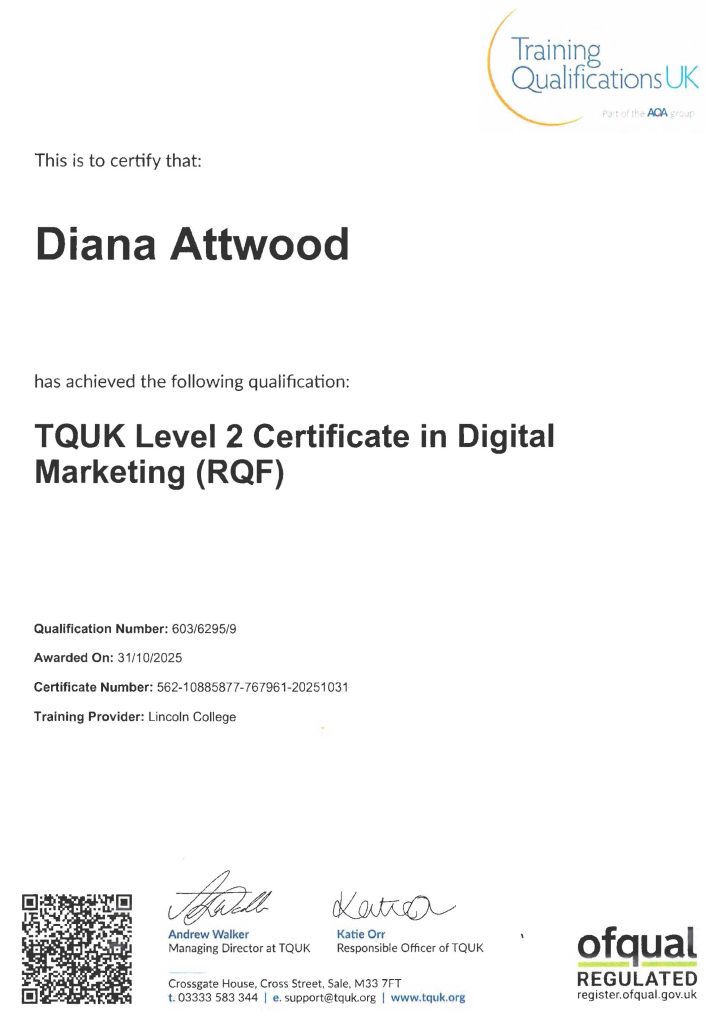
Some people try to sell it as a kind of alchemy, drowning clients in jargon until they believe it must be complicated. A few of my own clients have repeated this back to me and questioned my approach, so last year I backed up my experience with formal proof and completed the TQUK digital marketing course. Like most people in this sector, I’m self‑taught, so having the certificate shows that my understanding is solid.
Sites that generate stronger behaviour signals, meaning real people interacting with them, tend to perform better on the SERPs pages. Google doesn’t reward general traffic as a ranking factor, but it does respond to meaningful engagement. If you want good ranking, you need good interactions.
Ultimately, the point of your website is to get people to buy your goods or services, so it needs to suit your target audience. If you run a small restaurant, global likes are pleasant but useless. What you need is local people booking tables. There’s no sense in building a worldwide fan base when the customers you want live nearby.
SEO isn’t mysterious or magical. It’s about relevance, genuine interaction and making sure your website speaks to the people who actually need you. When you focus on clear content, real engagement and the right audience, your visibility improves naturally and your site starts working the way it should.
If you want your website to attract the right customers and perform better in search, get in touch and let’s make it happen.

So we look at this with an applied strategy and some market research. It might mean running a few A/B test posts so we can check the analytics and see how each one performs. Small tweaks in wording, visuals or timing tell us a lot about what your audience responds to, and that helps us shape a plan that works.